Arid climate pest populations throughout the Middle Rio Grande basin operate on seasonal moisture cycles that drive pests directly into residential structures. In river-adjacent zones like North Valley and South…
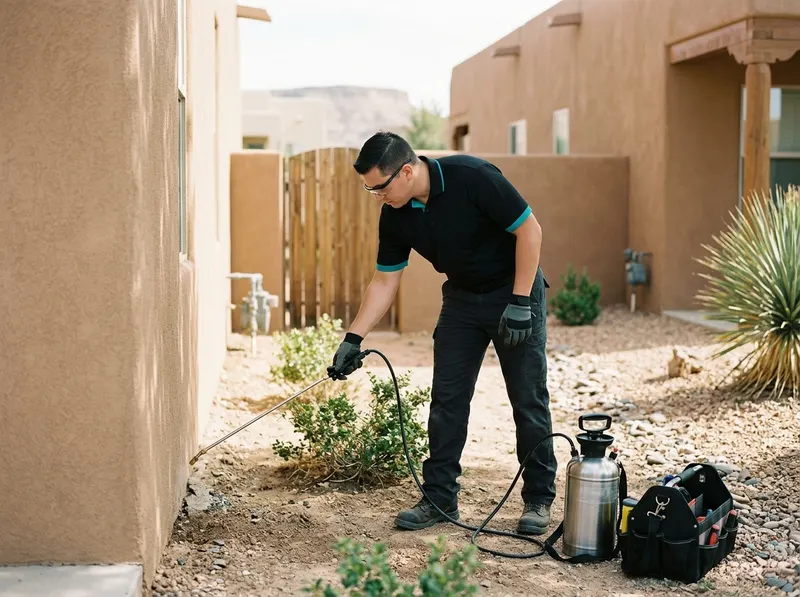
Arid climate pest populations throughout the Middle Rio Grande basin operate on seasonal moisture cycles that drive pests directly into residential structures. In river-adjacent zones like North Valley and South Valley, high water tables and dense organic matter generate intense Turkestan cockroach and centipede pressure. Further east, along the granitic alluvial slopes of High Desert and Sandia Heights, desert bark scorpions and black widows seek crawlspaces and stucco weep screeds to escape summer thermal peaks reaching above 95 degrees Fahrenheit. Store-bought synthetic pyrethroid sprays often fail in these environments because extreme UV exposure rapidly degrades surface chemicals, while airborne repellents cause arachnids and roaches to scatter deeper into wall voids, insulation, and subfloor plumbing chases.
Effective defense requires an Integrated Pest Management protocol engineered for high-desert architecture. Adobe, synthetic stucco (EIFS), and split-face block common to homes in Ventana Ranch, Taylor Ranch, and the Westside contain expansion joints and ground-clearance vulnerabilities. Field interventions establish a 3-foot vertical and 5-foot horizontal exterior boundary using microencapsulated suspensions that resist thermal breakdown. Technicians seal mechanical penetrations, utility conduits, and foundation transitions, eliminating entry paths instead of relying on continuous broadcast spraying. Interior bait placements utilize targeted metabolic inhibitors placed out of reach of domestic pets and children, eliminating colonies at the harborage source.
Homeowners selecting between emergency single-visit knockdowns and scheduled quarterly barrier programs balance immediate eradication against structural re-infestation cycles. A single targeted application resolves active, localized infestations within living areas, but it leaves properties exposed once exterior barrier persistence drops off after 60 to 90 days of high-desert weathering. A continuous quarterly barrier creates sustained perimeter protection that intercepts foraging arachnids and crawling insects before they breach interior living spaces. Properties situated near open desert acreage, such as Bear Canyon or areas bordering Petroglyph National Monument, require these persistent perimeter bands to counter steady seasonal migrations from undisturbed desert soils.
Every job gets a firm, written price after a free on-site visit.
Tell us about your residential pest control job in Albuquerque and we'll send a clear, written quote, usually the same day.
 Nexaro Pest Removal